Books
Design As Democratic Inquiry
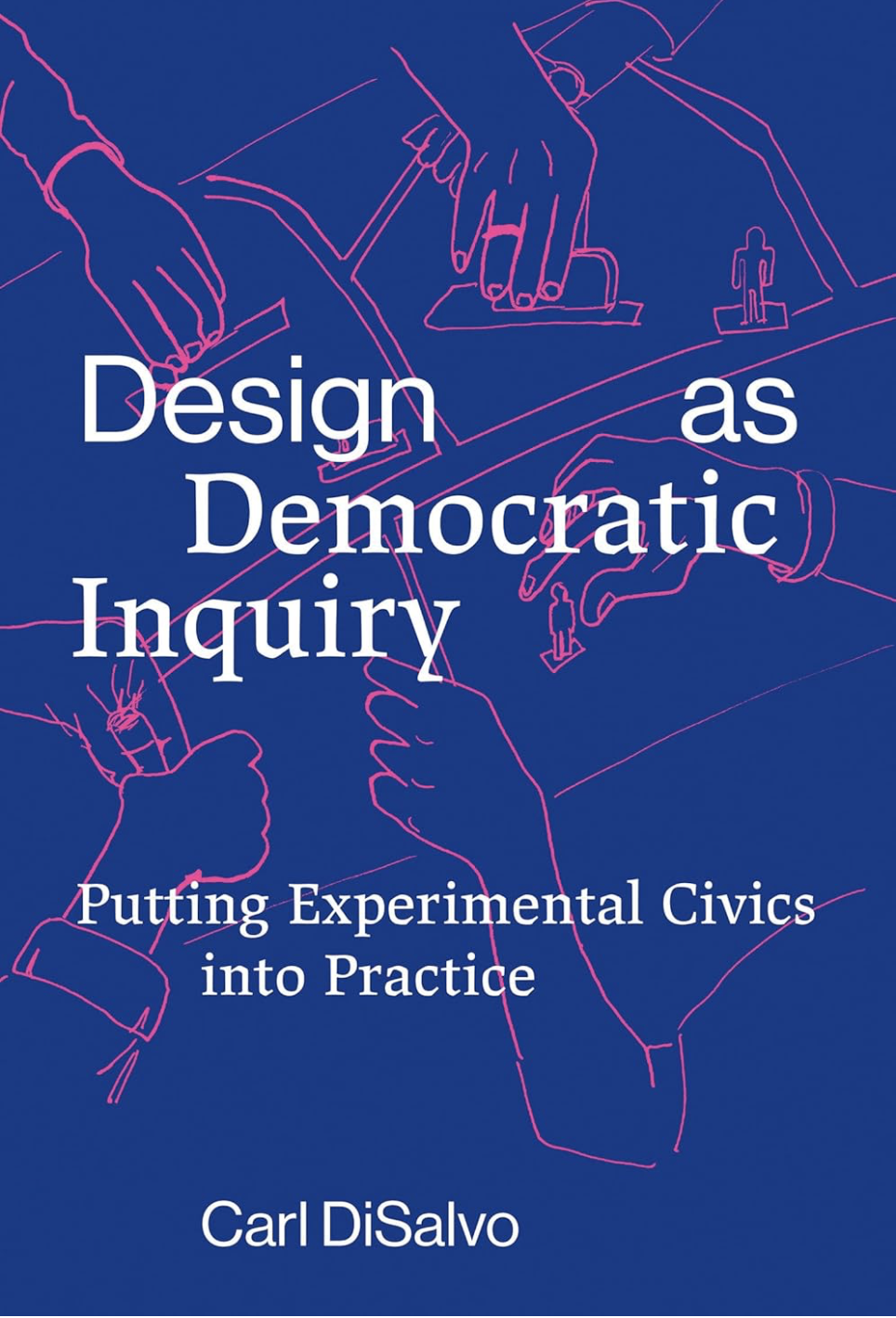
“In this counterpoint to the grand narratives of design punditry, DiSalvo presents what he calls ‘doing design otherwise.’ Arguing that democracy requires constant renewal and care, he shows how designers can supply novel contributions to local democracy by drawing together theory and practice, making and reflection. The relentless pursuit of innovation, uncritical embrace of the new and novel, and treatment of all things as design problems, says DiSalvo, can lead to cultural imperialism. In Design as Democratic Inquiry, he recounts a series of projects that exemplify engaged design in practice.”
Available in paperback or open access from MIT Press.
“Through practices of collaborative imagination and making, or ‘doing design otherwise,’ design experiments can contribute to keeping local democracies vibrant.”
Adversarial Design

“DiSalvo explores the political qualities and potentials of design by examining a series of projects that span design and art, engineering and computer science, agitprop and consumer products. He views these projects—which include computational visualizations of networks of power and influence, therapy robots that shape sociability, and everyday objects embedded with microchips that enable users to circumvent surveillance—through the lens of agonism, a political theory that emphasizes contention as foundational to democracy. DiSalvo's analysis provides design criticism with a new approach for thinking about the relationship between forms of political expression, computation as a medium, and the products of design.”
Available in paperback from MIT Press.
“An exploration of the political qualities of technology design beyond simplistic problem solving. “
Edited Books
digital STS: A Field Guide for Science and Technology Studies
Edited by Janet Vertesi & David Ribes
Co-Edited by Carl DiSalvo, Laura Forlano, Steven J. Jackson, Yanni Loukissas, Daniela K. Rosner, & Hanna Rose Shell
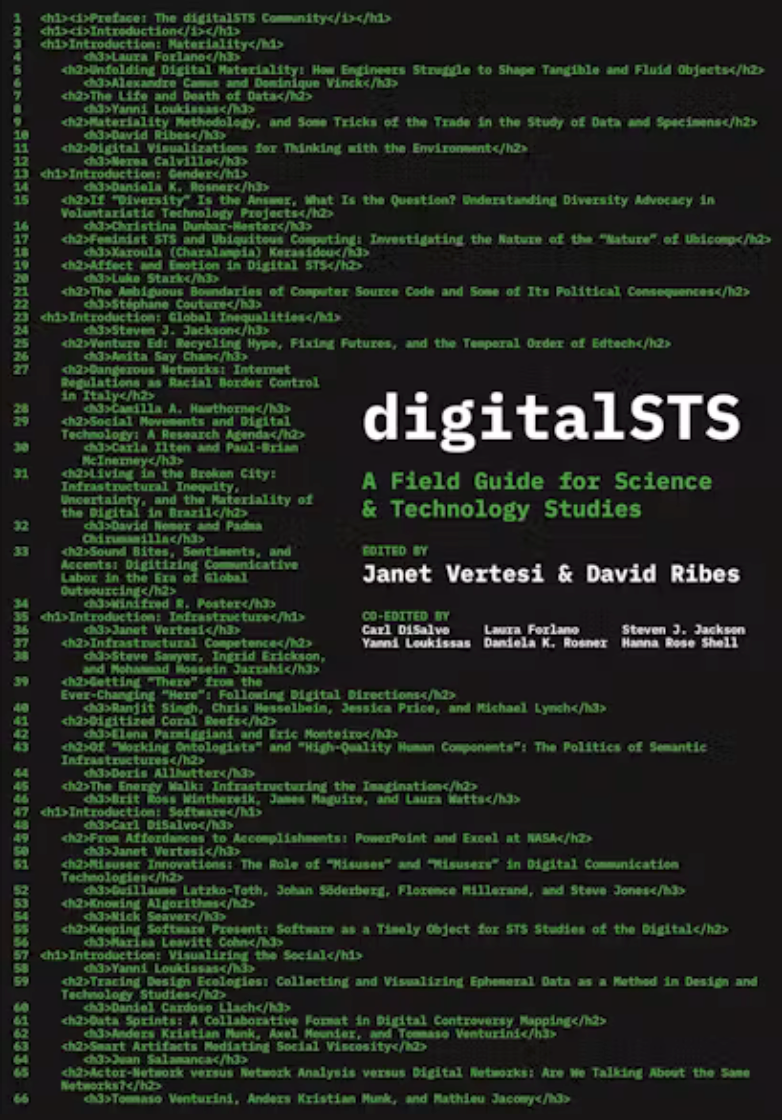
“In twenty-five pioneering and incisive essays, this unique digital field guide offers innovative new approaches to digital scholarship, the design of digital tools and objects, and the deployment of critically grounded technologies for analysis and discovery. Contributors cover a broad range of topics, including software development, hackathons, digitized coral reefs, diversity in the tech sector, and distributed scientific collaborations. They discuss methodological considerations of social networks and data analysis, design projects that can translate STS concepts into durable scientific work, and much more.”
Available from Princeton University Press.
Participatory Design for Learning: Perspectives from Practice and Research
Edited by Betsy DiSalvo, Jason Yip, Elizabeth Bonsignore, & Carl DiSalvo
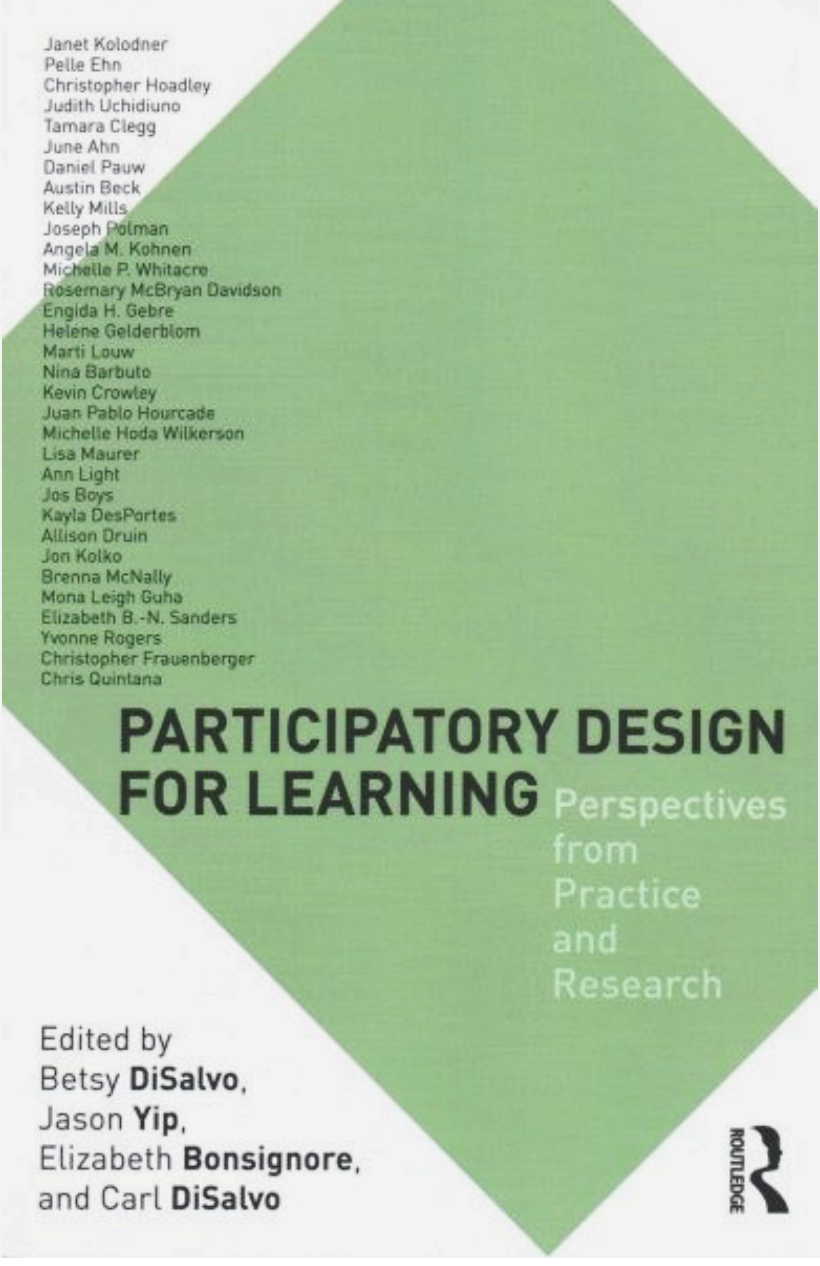
“In Participatory Design for Learning: Perspectives from Practice and Research, contributors from across the fields of the learning sciences and design articulate an inclusive practice and begin the process of shaping guidelines for such collaborative involvement. Drawing from a wide range of examples and perspectives, this book explores how participatory design can contribute to the development, implementation, and sustainability of learning innovations. Written for scholars and students, Participatory Design for Learning: Perspectives from Practice and Research develops and draws attention to practices that are relevant to the facilitation of effective educational environments and learning technologies.”
Available from Routledge.
Select Book Chapters
“Community Mapping” in
Ninety-Nine Graphic Design Workshops: The Way We Attend to Things
Edited by James Dyer & Nick Deakin
“The workshops in this book are practical challenges to the ways we think about the world we live in. Without relying on specialist equipment or subject-specific knowledge they give clear instructions about how to be mindful of the real world in unusual ways. From the informal and playful to the critical and insightful, each workshop finishes with a diverse list of recommended further reading that extends well beyond the designer’s traditional bookshelf. With contributors ranging from designers and painters to philosophers, dancers, poets, and documentary filmmakers, this eclectic mix of workshops changes how we think about the creative potential of our day-to-day lives.”
Available from Set Margins Press
“Participatory Design For, With, and By Communities”
by Carl DiSalvo, Andrew Clement, & Volkmar Pipek in
The Routledge International Handbook of Participatory Design
Edited by Jesper Simonsen & Toni Robertson

“Participatory design is about the direct involvement of people in the co-design of the technologies they use. Its central concern is how collaborative design processes can be driven by the participation of the people affected by the technology designed. Embracing a diverse collection of principles and practices aimed at making technologies, tools, environments, businesses, and social institutions more responsive to human needs, the International Handbook of Participatory Design is a state-of-the-art reference handbook for the subject.”
Available from Routledge.